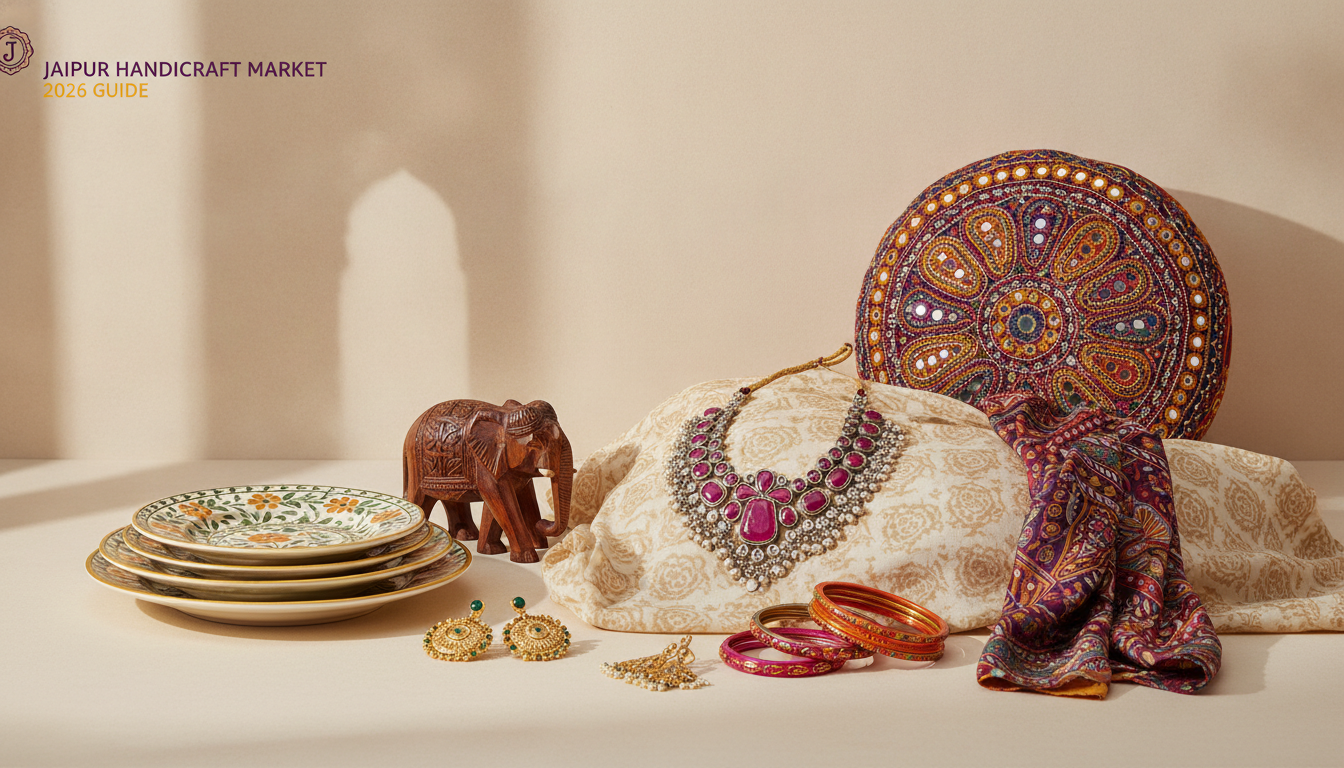
Walk through the arched gateways of the Pink City's old quarters and you'll understand immediately why collectors, decorators, and curious travellers keep coming back. The jaipur handicraft market scene is not one shop or one street; it's an entire ecosystem of bazaars, workshops, and family-run stalls that has been humming for centuries. If you want authentic Rajasthani crafts, real meenakari jewellery, hand-block-printed textiles, or sandalwood carvings, you've come to the right city, and this guide will tell you exactly where to go and what to watch out for.
Why Jaipur Remains India's Craft Capital in 2026
Jaipur's artisan traditions trace back to the royal courts of the 18th century, when Maharaja Sawai Jai Singh II attracted skilled craftspeople from across the subcontinent. That legacy is still visible on every street corner. The city is home to tens of thousands of working artisans across gem cutting, blue pottery, block printing, lac jewellery, and marble inlay.
The numbers back up what you see on the ground. According to an India Handicrafts Market report (Ken Research, via marketresearch.com), India's handicrafts sector is on a strong growth trajectory to 2028, driven by rising global demand for handmade, culturally distinctive goods. A separate analysis of the global handicrafts market (Credence Research, 2032 forecast) shows accelerating export demand, with buyers in North America and Europe leading that charge. Jaipur sits at the centre of this momentum, producing goods that travel to gift shops in New York and interiors studios in London.
For expat Indian buyers and international home decor enthusiasts, a guide from ShipGlobal on marketing Jaipur handicrafts to US consumers confirms that Jaipur-origin crafts carry strong brand recognition among diaspora communities and Western buyers precisely because of the city's reputation for quality and variety.
The Famous Handicraft Markets of Jaipur, One by One
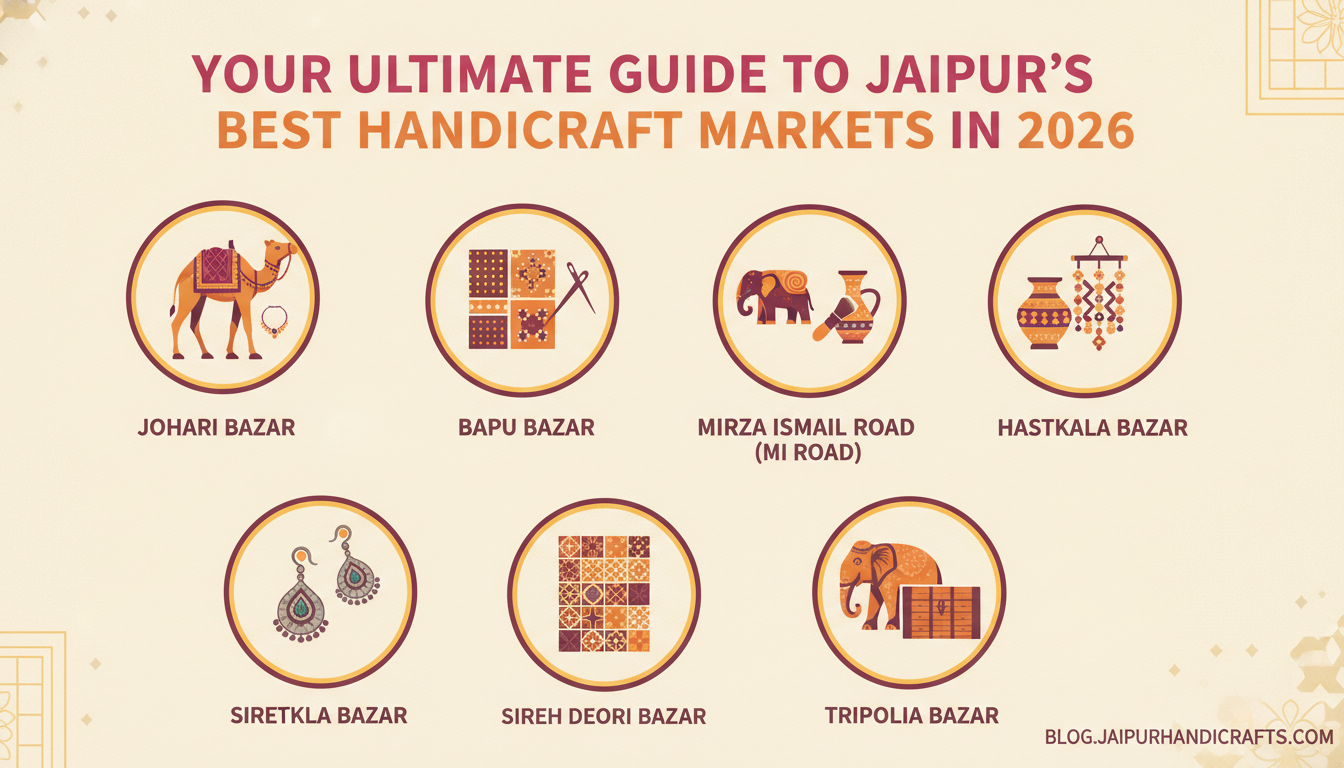
The best places to buy handicrafts in Jaipur are clustered around the walled city's historic bazaar lanes. Each market has a distinct character and speciality.
Johari Bazaar: Gems, Jewellery, and Fine Craft
Johari Bazaar is the undisputed heart of Jaipur's gem and jewellery trade. The name translates loosely as "jewellers' market", and it lives up to that billing with hundreds of shops selling everything from raw gemstones to finished kundan, polki, and meenakari pieces. Johari Bazaar Jaipur handicrafts go well beyond jewellery, though. You'll find miniature paintings, decorative brassware, and carved stone items tucked into the side lanes. Bargaining is expected, but at the serious gemstone shops, fixed prices are increasingly common. Arrive before noon to avoid the afternoon rush.
Bapu Bazaar: Textiles, Juttis, and Everyday Treasures
Bapu Bazaar Jaipur shopping is the experience most first-time visitors describe as the most chaotic and the most rewarding. This long, narrow street runs parallel to the city wall and is lined with shops selling block-printed cotton, bandhani dupattas, leather juttis, lac bangles, and printed quilts (razais). Prices are lower here than in the hotel boutiques, and the sheer volume of goods is staggering. A good rule: walk the full length of the street before buying anything so you can compare quality and price across multiple vendors.
Chandpole Bazaar: The Craft Workshop District
Chandpole Bazaar is where the handicraft market in Jaipur reveals its working, unglamourised side. The bazaar runs west from the Chandpole Gate and is the city's main hub for marble and wooden handicrafts. You can watch artisans carving elephants, inlaying marble with semi-precious stones, and finishing lacquerwork in tiny workshops that open directly onto the street. Wholesale buyers and retail tourists shop the same stalls here, which keeps prices honest. It's also worth noting that Chandpole near the First Crossing is widely cited by local videographers and craft specialists as one of the cheapest places to find wooden handicraft items.
Kishanpole Bazaar: Furniture, Brassware, and Statement Pieces
If you're furnishing a home or hunting for large statement pieces, Kishanpole Bazaar is your destination. This market specialises in painted wooden furniture, antique reproductions, brassware, and large decorative items that serious collectors seek out. Pieces here often take inspiration from Mughal and Rajput court aesthetics. Shipping to international destinations is common, and many shops have well-established export experience.
Nehru Bazaar and MI Road: The Accessible Middle Ground
For travellers who want a more curated, less overwhelming shopping experience, Nehru Bazaar and the stretch of MI Road offer fixed-price emporia alongside independent boutiques. The Rajasthan Government's official craft emporiums on MI Road are particularly useful if you want guaranteed authenticity certification and standardised pricing, even if the atmosphere is calmer than the older bazaars.
What to Buy in Jaipur Markets: A Quick Reference
Knowing what each craft tradition looks like helps you avoid buying machine-made imitations. Here's a practical breakdown:
| Craft | What to Look For | Best Market |
|---|---|---|
| Blue Pottery | Hand-painted, slightly uneven glaze; no two pieces identical | Kripal Kumbh, Nehru Bazaar |
| Block-Printed Textiles | Slight variations in print alignment; natural dye bleeding at edges | Bapu Bazaar, Sanganer village |
| Meenakari Jewellery | Bright enamel fill between gold or silver wire partitions | Johari Bazaar |
| Marble Inlay | Semi-precious stone chips, not paint; smooth to the touch | Chandpole Bazaar |
| Lac Bangles | Warm-looking resin with embedded mirror or metalwork | Maniharon Ka Rasta (off Johari Bazaar) |
| Miniature Paintings | Fine detail on silk, ivory paper, or camel bone | Johari Bazaar, Kishanpole |
Research into the challenges facing Jaipur's artisan sector (Academia.edu analysis) notes that mass-produced imitations increasingly appear alongside authentic work, particularly in high-tourist areas. The best defence is knowing what the real thing feels and looks like before you shop.
How to Find Authentic Rajasthani Handicrafts Without Getting Fooled
Authenticity comes down to three things: maker, material, and method. Authentic Rajasthani handicrafts Jaipur artisans produce are made by hand using traditional tools, natural or locally sourced materials, and techniques passed down through hereditary craft communities (called karigar communities).
Ask vendors these questions directly:
- Where is this made? (Workshop, or imported?)
- What is the base material? (Genuine marble versus painted resin feels cold and heavy.)
- Can I see the workshop? (Many Chandpole workshops welcome this.)
Government-recognised craft marks and GI (Geographical Indication) tags exist for several Jaipur crafts including blue pottery and Sanganer block printing. Not every stall will display them, but asking about them shifts the conversation toward transparency.
Wholesale and Bulk Buying in Jaipur
Jaipur is one of the few Indian cities where a tourist and a wholesale buyer walk the same streets. The handicraft wholesale market in Jaipur is primarily concentrated around Chandpole and the lanes behind Kishanpole Bazaar, where minimum order quantities are sometimes negotiable for serious buyers. If you're importing goods for a retail business, the Jaipur wholesale market guide on Jaipur Stuff covers the logistics and market structure in more detail.
For smaller buyers who still want trade pricing, building a relationship with one or two vendors over repeat visits often unlocks better rates than aggressive one-time bargaining. Wholesale handicraft market in Jaipur sellers respond well to buyers who show genuine knowledge of the craft.
Practical Tips Before You Go
A few things competitors rarely mention but every seasoned Jaipur shopper knows:
Opening hours vary widely. Most bazaars operate from around 10 a.m. to 8 p.m., but some close on Sundays or during local holidays. Check the Jaipur Stuff guide on market closures before planning a specific shopping day.
Cash is still king in the older lanes. While UPI and card payments are accepted at larger shops, many artisan stalls in Chandpole and Kishanpole prefer cash and may quote different prices depending on payment method.
The small lanes are where the real finds live. The market in the small lanes of Jaipur post on Jaipur Stuff maps out several tucked-away alleys off the main bazaars where artisan-to-buyer sales happen directly, cutting out the middleman entirely.
Budget time for food. Shopping the bazaars on an empty stomach is a mistake. The best places to eat in Jaipur are often steps away from the craft markets and worth factoring into your day.
Finally, India's handicraft export sector is growing fast, and young entrepreneurs are now using digital platforms to take these same products global (DataIntelo global handicrafts market report). That means genuine artisan work is increasingly available online without sacrificing quality or provenance.
Key Takeaways
- Jaipur's craft markets are organised by speciality: Johari Bazaar for gems and jewellery, Bapu Bazaar for textiles and daily crafts, Chandpole for marble and wood, Kishanpole for furniture and brassware.
- Authentic pieces show slight irregularities and use natural or heavy materials; ask questions and visit workshops when possible.
- The handicraft items wholesale market in Jaipur is accessible to individual buyers in Chandpole and Kishanpole lanes.
- GI tags and government emporiums on MI Road offer certified authenticity at fixed prices.
- Small side lanes often yield better prices and more direct artisan contact than the main thoroughfares.
- Market closures happen around local events and festivals; check ahead before visiting.
- Online buyers can access curated, authentic Jaipur crafts without the travel.
Frequently Asked Questions
What is the best handicraft market in Jaipur for first-time visitors?
Johari Bazaar is the most iconic starting point, combining jewellery, gems, and adjacent craft stalls in a compact, walkable area. For textiles and everyday souvenirs, Bapu Bazaar offers the widest variety at accessible prices. First-timers benefit from visiting both in a single afternoon.
What handicrafts is Jaipur most famous for?
Jaipur is best known for meenakari and kundan jewellery, blue pottery, hand block-printed textiles (especially from Sanganer), marble inlay work, lac bangles, and miniature paintings in the Mughal-Rajput tradition. Each of these has a distinct artisan community behind it.
Is bargaining normal in Jaipur's craft markets?
Yes, in most open bazaars like Bapu Bazaar and Chandpole, bargaining is standard practice. Government emporiums and branded boutiques operate on fixed prices. A reasonable opening counter-offer is typically 30 to 40 percent below the asking price in the open markets.
When is the best time of year to visit Jaipur for handicraft shopping?
October through March is the most comfortable season. The Jaipur Literature Festival in January and various craft melas in winter months draw artisans from across Rajasthan to the city, expanding what's available beyond the permanent bazaars.
Can I buy handicraft items at wholesale prices as an individual buyer?
Yes. The handicraft items wholesale market in Jaipur in the Chandpole and Kishanpole areas often sells to individual buyers, especially for marble, wood, and furniture items. Buying multiples of the same piece almost always unlocks a per-unit discount.
How can I verify that a Jaipur handicraft is authentic and not machine-made?
Check for slight irregularities in pattern or finish, feel the weight of the material (genuine marble is cold and heavy), and ask to see the workshop or a maker's card. Crafts like blue pottery and Sanganer block prints carry GI (Geographical Indication) recognition that vendors can reference.
What should I do if I can't visit Jaipur in person?
Several curated online platforms specialise in authentic Jaipur crafts sourced directly from artisans. The global handicrafts market's shift online means quality and provenance no longer require a flight to Rajasthan.
Can't make the trip to the Pink City this season? Everything this guide covers, from hand-painted blue pottery to meenakari jewellery, is available through Jaipur Stuff, a curated source for authentic Jaipur handicrafts delivered to your door. Shop the heritage without the haggling.