Pick up a Kundan necklace at a Jaipur bazaar and you're not just buying an accessory. You're holding roughly 5,000 years of craft history in your hands. This guide is for tourists exploring the Pink City's markets, expat Indians hunting for meaningful gifts, and global collectors who want to know what they're actually buying. Whether you're browsing in person or searching for authentic indian ethnic jewelry online, what follows will help you identify quality, understand context, and shop with confidence. According to the India Brand Equity Foundation, India's gems and jewelry sector employs over 4.64 million artisans and accounts for roughly 10% of total merchandise exports (IBEF, 2025). That number reflects centuries of living craft tradition.
What Is Indian Ethnic Jewelry?
Indian ethnic jewelry refers to handcrafted ornaments rooted in India's regional craft traditions, made using techniques like Kundan setting, Meenakari enamel work, and Jadau stone-embedding. These pieces carry cultural, ritual, and aesthetic meaning distinct from mass-produced fashion jewelry.
Unlike commercial jewelry made to trend cycles, ethnic Indian jewelry is tied to geography. A Polki set from Rajasthan looks and feels nothing like a Temple jewelry collar from Tamil Nadu. The materials differ (raw diamonds vs. gold with rubies), the symbolism differs, and the occasions they're worn for differ. Recognizing these distinctions is the first step to shopping smart.
Indian ethnic jewelry: handcrafted ornaments rooted in India's regional traditions, carrying cultural and ritual significance beyond pure aesthetics.
A Brief History of Indian Jewelry
The history of Indian jewelry stretches from the Indus Valley Civilization (circa 3000 BCE) through Mughal court aesthetics to today's global fashion runways. Each era added new techniques, materials, and meaning to an already-rich tradition.
The earliest evidence of Indian jewelry comes from excavations at Mohenjo-daro, where archaeologists found gold, shell, and carnelian bead ornaments. By the Mughal period (16th to 18th centuries), royal workshops in Jaipur and Delhi were producing the layered Kundan and Meenakari pieces that still define the most recognized traditional Indian jewelry styles today.
British colonial rule disrupted many craft guilds, but Jaipur survived as a center of gem-cutting and jewelry-making because of its established trade routes and patronage networks. Post-independence, Rajasthan's artisan communities were formally recognized, and Jaipur earned its reputation as the Gemstone Capital of the World.
Today, UNESCO's intangible cultural heritage frameworks shape how countries like India protect and promote these living craft traditions (UNESCO, 2024). That recognition matters when you're buying: it signals authenticity and artisan livelihood.
Also Read: History Of Jaipur
Types of Indian Ethnic Jewelry Worth Knowing
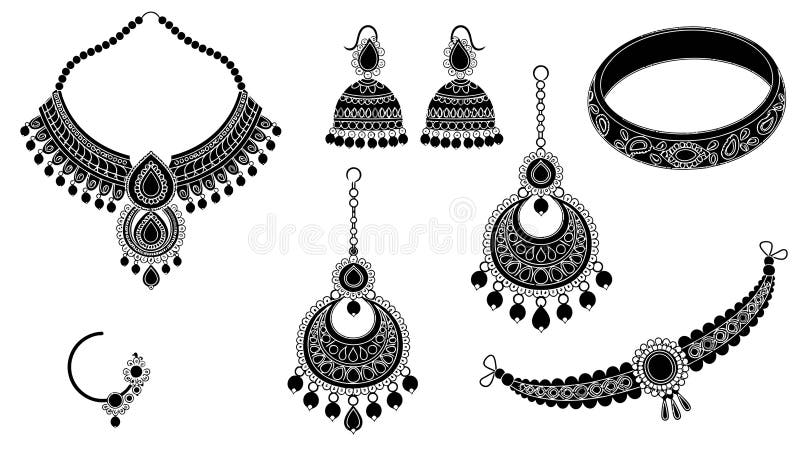
The six most important types of Indian ethnic jewelry are Kundan, Polki, Meenakari, Jadau, Temple jewelry, and Oxidized silver work. Each has a distinct craft process, regional origin, and occasion it's traditionally worn for.
Rajasthani Styles: Kundan, Polki, and Meenakari
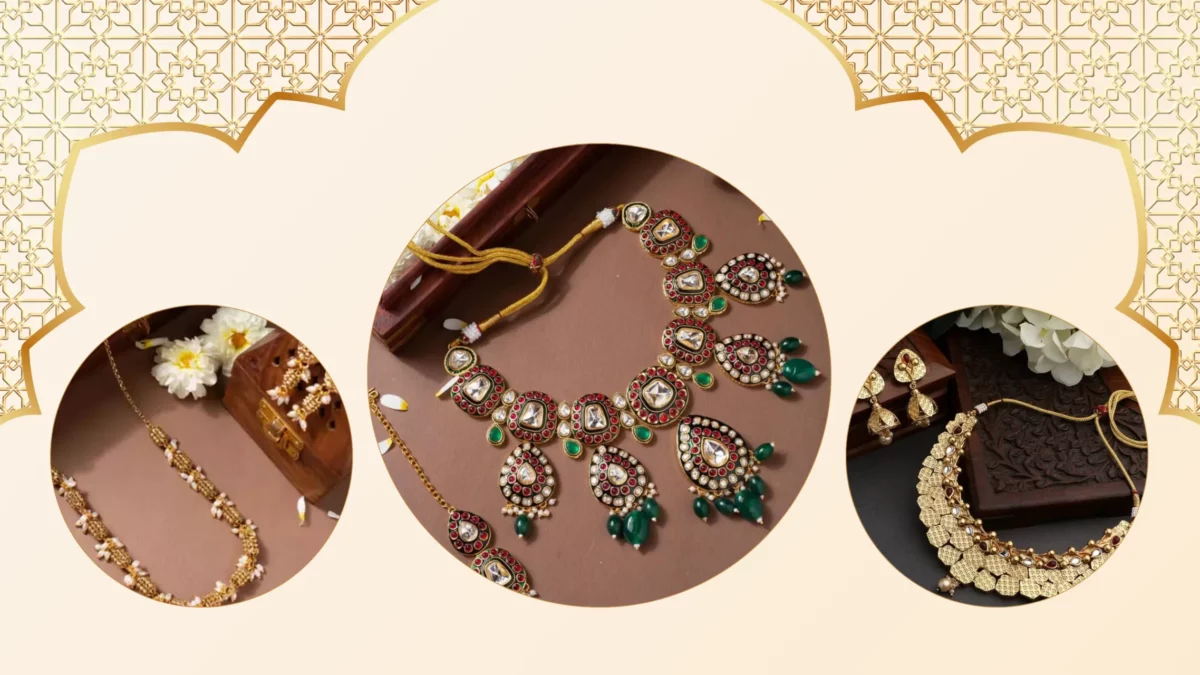
Kundan is the most iconic Rajasthani style. Artisans set uncut gemstones into a gold foil base, creating a flat, mosaic-like surface. The reverse side is typically decorated with Meenakari enamel work in vivid greens, reds, and blues. A true Kundan piece takes days to complete.
Polki uses raw, uncut diamonds (called Polki stones) rather than faceted ones. The look is softer and more organic than modern diamond jewelry. Polki sets are bridal staples across North India.
Meenakari is an enameling technique, not a jewelry form. It applies colored glass powder to metal using heat, creating patterns that survive centuries. You'll find it on the reverse of Kundan pieces and as standalone earrings and bangles.
Other Regional Styles Across India
- Jadau: Stones are embedded directly into molten gold, creating an inseparable bond. A Jadau piece is heavier and more durable than Kundan.
- Temple Jewelry: Originating from South Indian temple traditions, these pieces feature deity motifs (Lakshmi, Ganesha) in high-karat gold with rubies and emeralds.
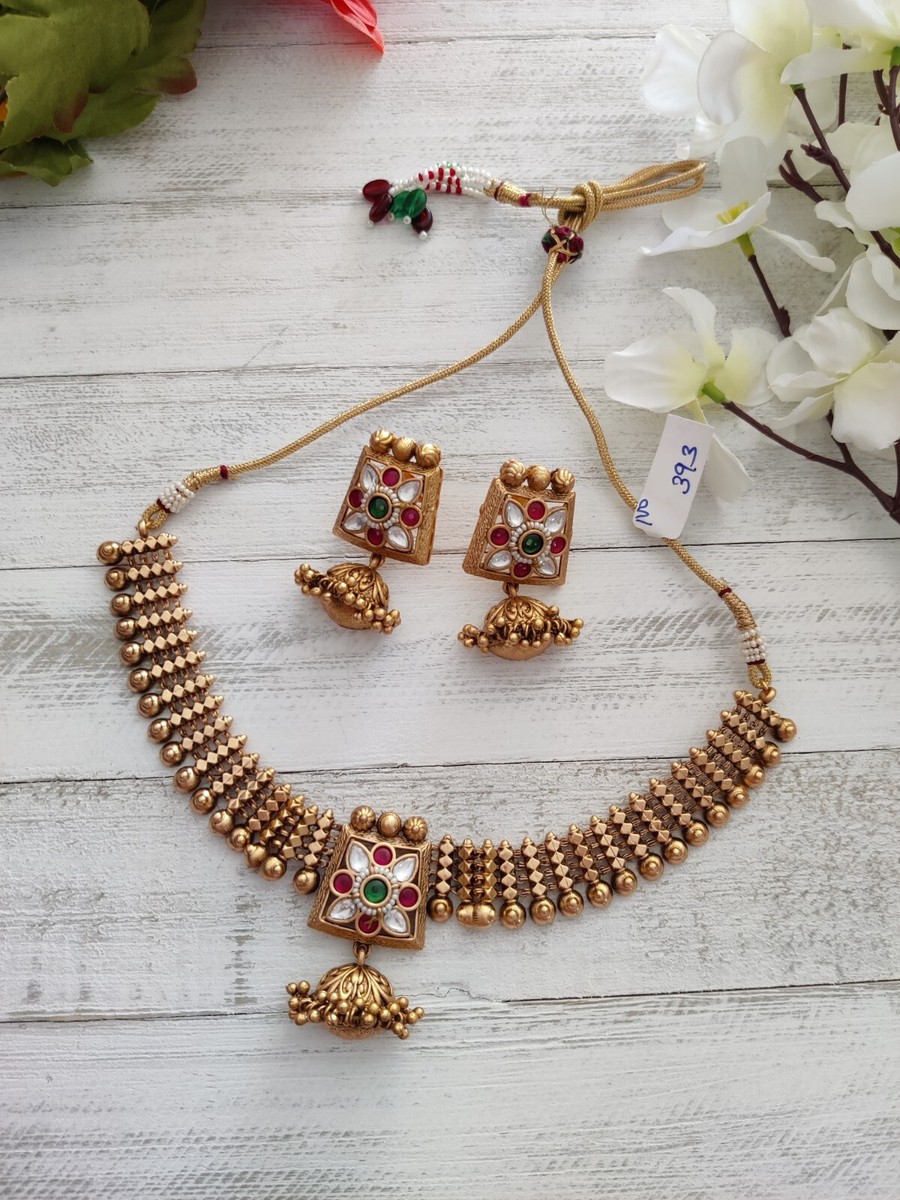
- Oxidized Silver Work: A tribal-influenced style popular across Rajasthan and Gujarat. The dark patina on silver gives these pieces their distinctive bohemian character. Indian ethnic silver jewelry in this style is the most accessible price point for travelers.
| Style | Origin | Key Material | Best For |
|---|---|---|---|
| Kundan | Rajasthan | Gold foil, gemstones | Weddings, festivals |
| Polki | Rajasthan/Delhi | Uncut diamonds, gold | Bridal sets |
| Meenakari | Jaipur | Enamel on gold/silver | Gifting, everyday wear |
| Temple | Tamil Nadu | High-karat gold, rubies | Ceremonies, dance |
| Oxidized Silver | Rajasthan/Gujarat | Silver with patina | Casual, boho style |
How Do You Choose Authentic Indian Ethnic Jewelry?
You identify authentic Indian ethnic jewelry by checking four things: the craft technique used, the metal purity markings, the artisan source, and whether the seller can explain the regional origin. Reputable sellers always welcome these questions.
Here's a practical checklist:
- Ask about the technique. A legitimate Kundan piece has foil-set stones on both sides. Ask the seller to show you the enamel reverse.
- Check metal purity. Look for BIS hallmarks on gold (BIS 916 = 22 karat) or 925 stamps on silver pieces.
- Source from known craft clusters. Jaipur's Johari Bazaar and Tripolia Bazaar are the two most established ethnic jewelry markets in India. Buying there reduces the risk of machine-made replicas.
- Verify the weight. Handcrafted pieces are denser than cast imitations. A light Kundan necklace is almost always machine-made.
- Ask for a certificate or invoice. Any serious seller of fine jewelry provides documentation.
For those who want to buy indian ethnic jewelry online without visiting Jaipur, look for sellers who photograph the reverse of pieces, list the artisan's name or village, and provide return policies.
Where to Buy Indian Ethnic Jewelry: In Jaipur and Online
The best places to buy authentic Indian ethnic jewelry are Jaipur's Johari Bazaar for in-person shopping, and curated online stores that source directly from Rajasthani artisans for global buyers.
Jaipur concentrates more ethnic jewelry expertise per square kilometer than almost anywhere else in India. The city's gem-cutting heritage and proximity to traditional goldsmith communities (the Soni caste) mean that standards are higher here by default.
For those searching to buy Indian ethnic jewelry online in USA, the UK, or elsewhere, the key filter is direct artisan sourcing. Marketplaces that aggregate factory output rarely carry the same quality as curated stores with verifiable craft chains.
Expat Indians buying gifts should focus on pieces that travel well: Meenakari pendants, oxidized silver earrings, and Kundan brooches all pack flat, resist damage, and carry obvious cultural identity.
Also Read: Get Your Teej Outfit From Best Clothing Stores In Jaipur
According to a 2025 Statista report on India's jewelry market, online ethnic jewelry sales grew by approximately 18% year-on-year, driven largely by diaspora buyers in North America and the UK (Statista, 2025). That shift makes it more important than ever to know what distinguishes a genuine handcrafted piece from a cheap replica.
Key Takeaways
- Indian ethnic jewelry covers six major styles: Kundan, Polki, Meenakari, Jadau, Temple jewelry, and Oxidized Silver, each with a distinct regional origin and craft method.
- Jaipur is the global center of Kundan and Polki jewelry-making, making it the most reliable place to source authentic pieces in person.
- Authentic pieces carry BIS hallmarks, show enamel reverses on Kundan work, and come with artisan sourcing information.
- The history of Indian jewelry spans over 5,000 years, from Indus Valley beadwork to Mughal court Jadau sets.
- When buying indian ethnic jewelry online, prioritize sellers who photograph both sides of pieces and can name their artisan supply chain.
FAQs
What is the difference between Kundan and Polki jewelry?
Kundan jewelry uses gemstones set into gold foil, creating a flat mosaic surface with enamel on the reverse. Polki jewelry uses raw, uncut diamonds embedded in gold. Kundan tends to be more colorful and affordable. Polki is rarer, heavier, and associated with high-end bridal sets in North India.
Is Indian ethnic silver jewelry different from regular silver jewelry?
Yes. Indian ethnic silver jewelry, particularly the oxidized style from Rajasthan and Gujarat, uses a deliberate darkening process on sterling silver (925) to create a traditional patina. This technique is hand-applied, giving each piece a slightly different finish. Regular silver jewelry is polished bright and has no cultural motif structure.
How do I know if Indian ethnic jewelry is authentic?
Authentic pieces carry metal purity stamps (BIS 916 for gold, 925 for silver), show hand-finishing marks under close inspection, and come with seller documentation. Kundan pieces should have enamel visible on the reverse side. Ask the seller to explain the craft technique. A genuine artisan retailer always answers this question confidently.
Can I buy authentic Indian ethnic jewelry online if I'm outside India?
Yes, you can find ethnic Indian jewelry online from curated retailers that source directly from Jaipur and other craft hubs. Prioritize stores that show both sides of pieces, list artisan details, and offer clear return policies. Avoid mass-market platforms where provenance is impossible to verify.
What types of Indian ethnic jewelry are best as gifts for international buyers?
Meenakari pendants, oxidized silver jhumka earrings, and Kundan brooches are the best gifting choices. They pack flat, survive travel well, and have strong visual identity as Indian crafts. Sets with matching earrings and a necklace work well for weddings and festivals, especially for expat Indian families buying from abroad.
Jaipur Stuff curates authentic Indian ethnic jewelry sourced directly from the Pink City's master craftspeople. Every piece comes with verifiable artisan provenance and represents a living craft tradition that's worth supporting. Explore the collection at Jaipurstuff.com and bring a real piece of Jaipur home.